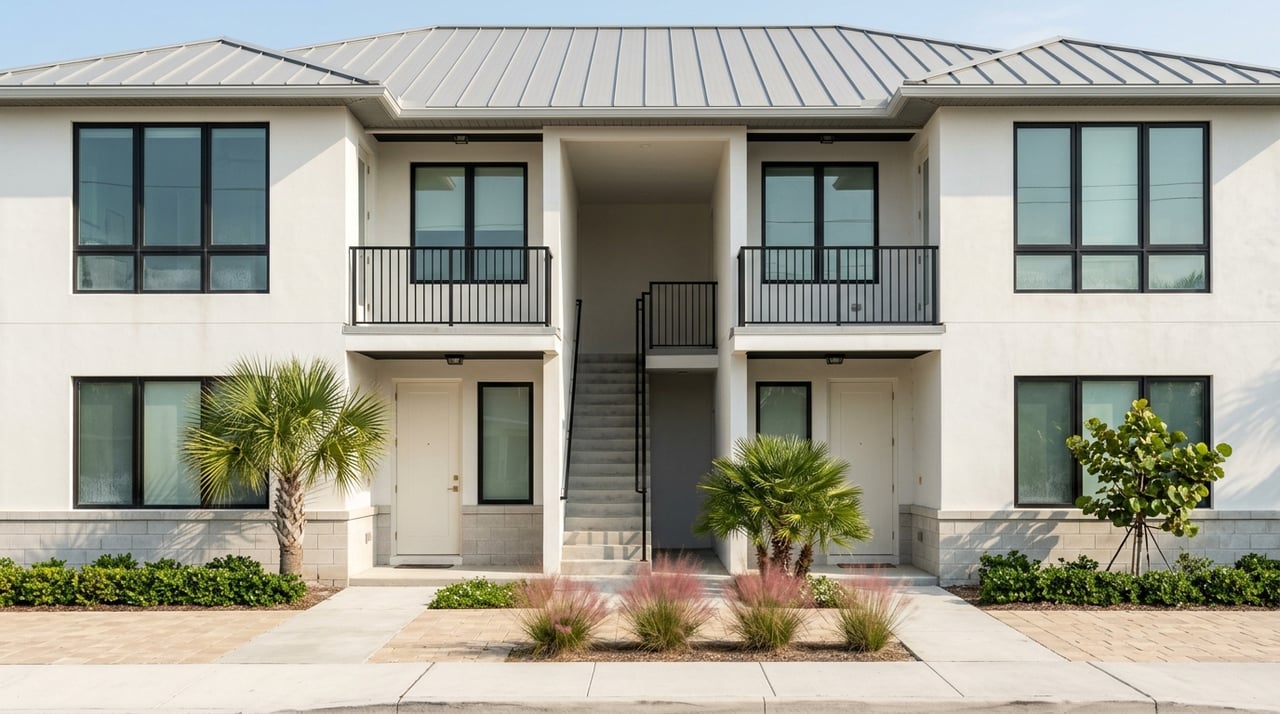
Key Dunedin Investment Property Basics for Coastal Buyers
April 16, 2026
April 16, 2026
Buying an investment property near the coast can look simple on paper, but the details matter fast in a market like Dunedin. If you are weighing rental income, seasonal demand, and long-term upside, you also need to think about zoning, taxes, utilities, and flood exposure before you commit. This guide walks you through the basics so you can evaluate a Dunedin investment property with more clarity and fewer surprises. Let’s dive in.
Dunedin offers a coastal location, a walkable downtown environment in select areas, and a housing mix that appeals to both full-time residents and seasonal users. For many buyers, that makes it attractive as a lifestyle purchase that may also support rental income.
At the same time, Dunedin is not a heavily renter-dominated market. According to the U.S. Census QuickFacts for Dunedin, about 71.1% of housing is owner-occupied, the city has 17,398 households, average household size is 2.03 people, median gross rent is $1,675, and 35.3% of residents are age 65 or older.
That demographic mix matters when you think about who your likely renter may be. The city’s 2025 economic profile also shows a median age of 57.4 and 6,657 renter-occupied households, which supports the idea that Dunedin has real rental demand, but not the same renter profile you might expect in a younger, denser urban market.
If you are buying in Dunedin for rental income, it helps to match the property to the local demand pattern. Based on the city’s household size and age profile, smaller households, retirees, and downsizers may be more common fits than larger-household rental demand.
That does not mean one property type always wins. It means your underwriting should reflect the local market instead of broad assumptions about Florida coastal rentals.
Before you buy, ask practical questions like:
One of the biggest decisions in Dunedin is whether you want a long-term lease strategy or a seasonal or short-term rental strategy. The answer affects taxes, compliance, zoning, and your day-to-day ownership experience.
In many cases, long-term leasing is the lower-friction path. Seasonal or short-term rentals can work, but only when the property is in the right area and the numbers still make sense after registration, taxes, and ongoing compliance.
A long-term lease can be easier to model because the tax treatment is simpler and turnover is usually lower. For many buyers, this approach fits best in conventional residential settings where the property is intended to function as a standard rental home or condo.
The research for Dunedin points to long-term leasing as the most straightforward route for many investors, especially when the parcel already fits a conventional residential zone. That can reduce surprises during due diligence and make your projected returns easier to track over time.
Florida treats rentals of six months or less as transient rentals. According to the Florida Department of Revenue, those stays are subject to a 6% state sales tax plus any applicable discretionary surtax, and counties may also add local transient rental taxes through their own rules.
In Pinellas County, the tourist development tax guidance and county rules show that short stays are subject to a combined tax burden that can total 13% on rentals of six months or less. A bona fide written lease longer than six months is exempt from those transient rental taxes.
That is a major difference in your pro forma. If you are modeling a seasonal or short-term property, you should treat these taxes as part of the deal structure, not as a minor afterthought.
This is where many investors need to slow down. Florida law limits how local governments can regulate vacation rental duration and frequency, but cities still control where vacation rentals may operate through zoning and local rules.
Dunedin’s transient use zoning table shows that short-term vacation rentals are not allowed in the city’s single-family residential districts. Some downtown, business, and form-based districts do allow transient uses.
That means you should never assume a property can be used as a short-term rental just because it is in a coastal Florida market. In Dunedin, the parcel’s zoning is a core part of the investment decision.
If a Dunedin property is eligible for vacation rental use, the owner still has compliance work to do. Under the city’s current rules, an approved vacation rental must be registered with Dunedin and assigned a unique registration number for advertising.
The city’s vacation rental ordinance and registration application materials show that owners need supporting items such as:
For the right property, that may still be worth it. But you want to build these items into your timeline and operating budget from the start.
Many first-time coastal investors focus too heavily on the purchase price and estimated rent. In Dunedin, your actual return depends on whether you model the recurring costs accurately.
Property taxes are one example. According to Pinellas County’s property tax overview, taxes come from multiple authorities, and buyers should use the TRIM notice rather than relying on a single millage rate. The county’s final FY26 general fund millage was 4.5423 mills, but that is only one part of the full tax picture.
Utilities also matter more than many buyers expect, especially if the property may sit vacant between occupants. Dunedin’s FY2025 utility rates list inside-city fixed monthly charges of $9.87 for water, $13.66 for sewer, $16.37 for stormwater, and $23.67 for garbage and recycling.
Even if water is turned off between stays, the city lists a vacation rate of $45.82 per month that still includes stormwater and a dormant garbage charge. That is why seasonal vacancy should never be treated as a zero-cost period.
A solid Dunedin investment analysis should include:
For seasonal or short-term properties, the owner-level compliance burden is part of the investment. It should be modeled as a real operating cost.
In a coastal market, flood review should happen before you finalize your offer strategy. FEMA states that the Flood Map Service Center is the official public source for flood hazard information, and those maps help lenders determine whether flood insurance is required.
Dunedin also uses parcel-level flood references that may include FIRM panels and flood hazard zones such as AE, VE, and X. That means a parcel-by-parcel review is essential, especially if you are comparing properties with very different elevations or coastal exposure.
FEMA also notes that most homeowners insurance does not cover flood damage. For an investment purchase, flood coverage should be modeled separately from your general hazard and wind-related insurance costs.
Before you move forward on a Dunedin investment property, confirm:
The research also notes that Dunedin’s short-term rental rules place ongoing responsibility on the owner if a rental agent fails to remit taxes. That is one reason some investors choose licensed property management as both a compliance step and a risk-control step.
For many coastal buyers, the most practical entry point in Dunedin is a property already suited to long-term leasing in a conventional residential zone. That path is often easier to underwrite and may come with fewer operational hurdles.
A seasonal or short-term strategy can still be viable in the right district, but only if the zoning, registration, taxes, utility carry, and insurance exposure all support the numbers. In other words, the property has to work as both a location choice and an operating business.
If you are exploring Dunedin as part of a broader Tampa Bay investment plan, the key is to buy with a clear strategy before you fall in love with the view. When you want help comparing properties, reviewing likely carrying costs, and narrowing in on a rental approach that fits your goals, Rosie Perez can help you move forward with a more informed plan.

We pride ourselves in providing personalized solutions that bring our clients closer to their dream properties and enhance their long-term wealth.